
A FREE Skills + Activities Checklist For Your 2-5 Year Old
/ Erin Cox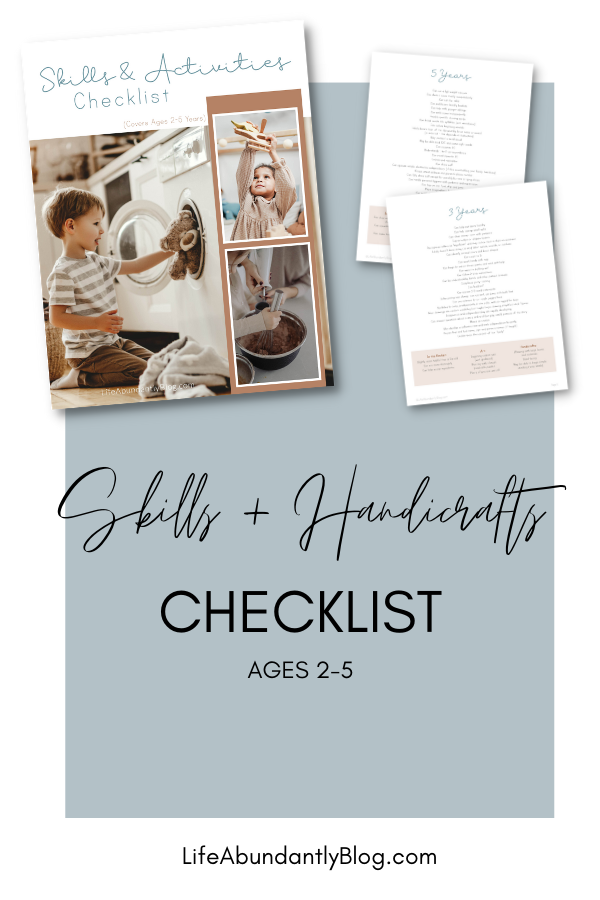
What are some milestones that I need to look for in my child’s behavior or abilities?
How do I know he’s ready for school?
How long should she be able to pay attention?
How much time should we spend on “school”?
My child doesn’t do ________, is that ok?
What are some ways that I can engage my child in a meaningful way during our busy days?
These are all questions I’ve asked over the years and questions I hear daily from busy, concerned homeschooling moms who want to make sure they’re doing what’s best for their child.
Ultimately, that’s what we alllll want. We want to make sure our child isn’t falling “behind.” We want to be confident in our expectations, knowing we are pushing them to do their best, but not over-expecting and crushing their little hearts.
I wish the gray area between those two spaces wasn’t so narrow, but it often is. However, geared with some insight from an experienced friend (and the google), you can get a better idea of what to expect of your child (loosely) at each age as well as a bank of ideas for engaging them in the home and in the kitchen.
I hope this checklist will bring the confidence, joy, and help that is intended and no shade of shame, guilt, or fear. Each child is different- fearfully and wonderfully made. I’ve been reticent to share such a resource as the last thing I would want to do is put more pressure or stoke more anxieties in a mother’s heart. We battle those fully enough on their own.



Know that this checklist came from research and experience with my own 4 children who are each so individually different, it was hard to put ages by each of these milestones or suggestions.
You can click the button below and enter your email address. You’ll have immediate access to this freebie and many others!
You May Also Like:

We are officially gearing up for another homeschool year! Honestly, in full transparency, I'm not super excited about it. I think it's because we've had such a busy summer that I don't feel like it's REAL that it's already August. But alas, here we are, whether I like it or not.
I'm being a total slacker on actually getting ready, but I have completed all of my planning, so I thought you might like to see what we have on our plate for the 2026–2027 school year for 4th and 5th grade boys :). I think talking about it will get my heart moving in that direction.
Here's our plan!

I mentioned the other day that I was working on a talk about joy—or more specifically, joyful early learning. Praise God, I finished it! Now I'm rehearsing it over and over again (lol). As tedious as that can be, the reason I wanted to give this talk is because… well… I need it, or at least parts of it.
Honestly, based on the emails I receive from time to time, I have a feeling some of you might need it too. About 97.5% of the "struggle" emails I receive are emails I absolutely could have written myself at some point, so there is ZERO shade here. BTDT, for real.
Many of the emails I receive that are related to behavioral and attitude struggles in children are also reflected in the emotional dysregulation the parent is displaying in the email. Sometimes, their language makes it clear that they are genuinely on the struggle bus with keeping it together, feeling overwhelmed, and overstimulated. Even more often, they simply admit it themselves. Whether it's an issue with self-control, anger, or diligence, it's usually confessed before they begin expressing their frustration over their child's struggles with… you guessed it… self-control, anger, or diligence.

One of my biggest parenting and education regrets?
It’s not that I wish I had been more rigorous. It’s that I wish I had been more diligent.
Diligence, self-control, and consistency were not virtues that were well developed when I entered motherhood. In fact, because I did not have Christ, I think I barely had any virtue at all. There’s not much that pains my heart more than remembering how unfaithful I often was with my sweet girls.
Praise God that He captured my heart and began a great work in me. Because of that—and because of home education—I began to grow in virtue alongside my daughters. Part of that growth was realizing the wisdom of diligence in home education. There is no growth without consistency.
I’ve now seen both sides of the coin: the struggle that came from delaying academics and leaning too heavily into child-led learning, and the fruit that comes from a diligent, consistent education. They are incomparable.
Lately, I’ve noticed another word making the rounds in homeschooling circles: rigor. I think it’s worth slowing down to ask whether that’s really what we’re looking for.

Education is about formation, not just information.
If your educational experience was anything like mine (public schoolers, raise your hand!), when you picture “education,” you primarily think “information.”
From a traditional schooling perspective, the daily goals look a lot like:
facts to learn
chapters to finish
standards to cover
tests to pass
And if we're honest, these expectations follow many of us into homeschooling. We assume our job is to deliver as much knowledge as possible, as efficiently as possible. Then, we probably need to do a test of some sort so we can SEE that our kids learned and maybe also show others that they're learning too.

Last week, on social media, I shared a post about discernment vs. control for homeschooling parents. It struck a nerve with many parents, so I wanted to share more here, plus the book list I created.
Here’s the gist:
In the early years of parenting, our job is control.
We control:
what they eat
what they watch
where they go
who they spend time with
how and what they learn

I'm afraid my kids think I'm losing it.
I've had a hard time getting through studies, hymns, and readings lately without getting weepy. Whether it's singing Come Thou Fount of Every Blessing or reciting The Lamb by William Blake or even repeating our catechisms about the just wrath of God, I just end up in a big puddle at the end.
It's a hard pill to swallow … to imagine the suffering of my perfect, sinless, loving, compassionate Savior … all because of my sin. That, even knowing what He endured, I still pick up the nails and hammer every day. My stomach turns to think that on a normal Thursday afternoon, my flesh weaves a new crown of thorns to plunge into His scalp. When I am angry, inconvenienced, or honestly just uncomfortable, it is horrifying how often I choose to whip His back with the lashes of my tongue instead of humbling myself at the foot of His Cross.
My sweet Savior, tortured and murdered for my sins. I readily confess it with my lips, I rely on it for the salvation of my soul, and still, in my flesh, I crucify Him again and again.
Lord Jesus Christ, Son of God, have mercy on me, a sinner.

I was on the struggle bus last week. I’ll be the first to tell you—February is always a hard month. Even when you don’t homeschool, you can feel it. Everyone is tired of the cold and dreariness, home starts to feel a little claustrophobic, there’s not a lot going on socially as people withdraw, and we start looking ahead to what feels like greener grass instead of continuing to rest and work where we are.
If you’ve been thinking about quitting homeschool because you’re anxious about progress, comparing your days to social media, comparing your kids to their peers, or you and your kids are just plain tired of one another, I want you to know that you aren’t alone. This is a well-known phenomenon in the homeschool world, usually called the February Slump.
How you’re feeling has a name. If nothing else comforts you, let that.

Wow. I am so thankful to have a moment to sit down and write this.
Life has felt like a whirlwind lately—in all the best ways, but still… a lot. Somehow, my two older girls managed to have their apartment leases end within one day of each other. Neither planned to stay where they were, and everything shifted all at once.
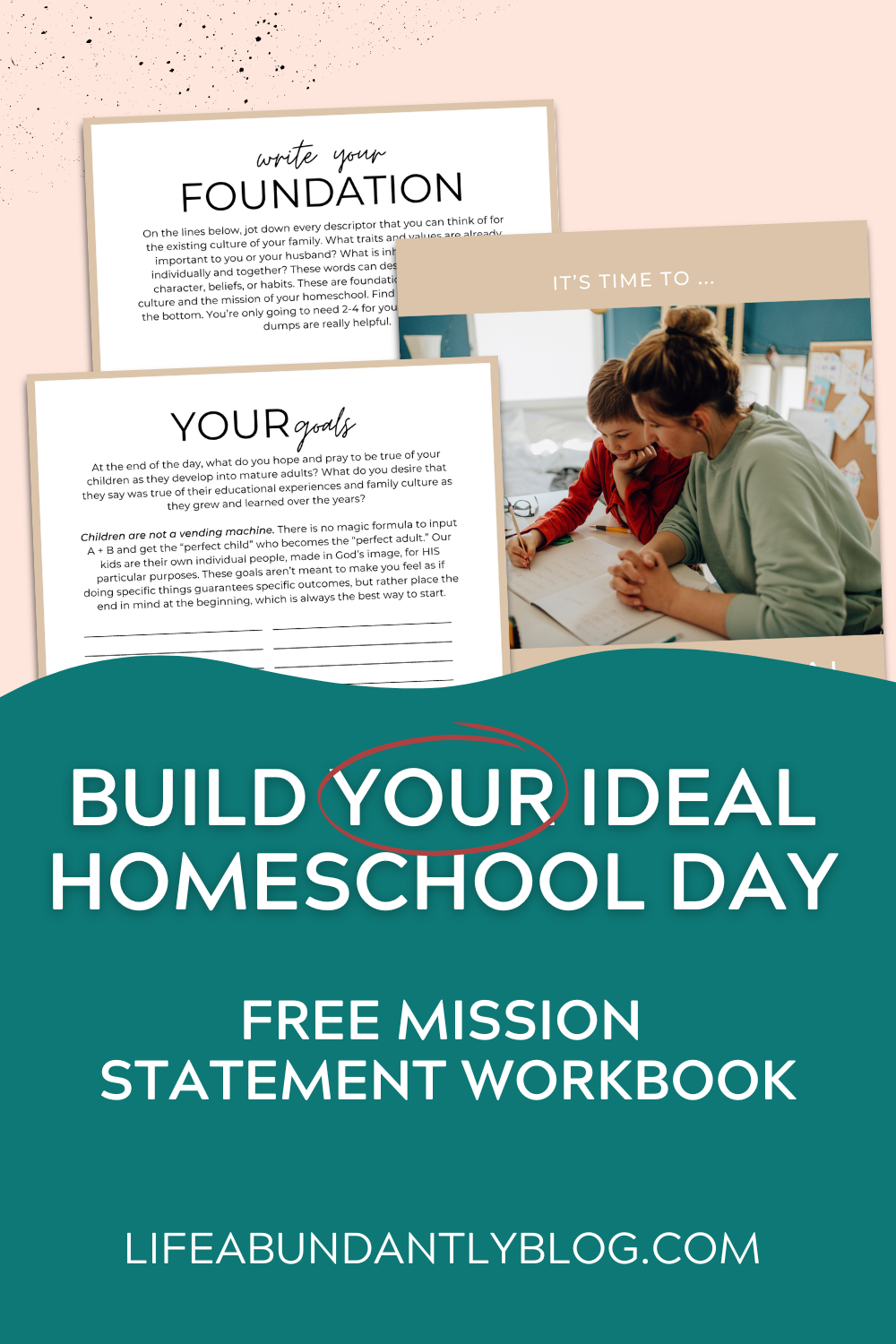
Homeschooling can feel really overwhelming at times. Whether you started with hesitation or dove in with excitement, it usually doesn’t take long for all the things to feel like chaos. Even if you enter your home education journey with experience or natural confidence, it’s easy for that to be shaken when you’re working to figure out the most wholesome, intuitive, and joyful daily rhythms for your family.
This feeling is completely normal, friend! Every homeschooling parent experiences it at some point! Every year brings more incredible curricula, unit studies, local co-ops, online programs, sports, extracurricular activities, music lessons, and so much more. It’s a wonderful time to be homeschooling!

I was.
Recently, we found a picture one of my girls snapped back in 2011 during my first “full year” of homeschool planning. I remember that day clearly. I remember the couch. The stacks of books. The planner. The look on my face.
I was, indeed, freaked out.
I knew no one who homeschooled. We really couldn’t afford for me not to work. We lived in a small town where the school was the community. Choosing something different felt like stepping outside the circle. I had always learned things easily, but I had zero experience teaching anyone anything. I was terrified I would fail my children, disappoint my husband, and make a decision that would ripple through all of our lives.
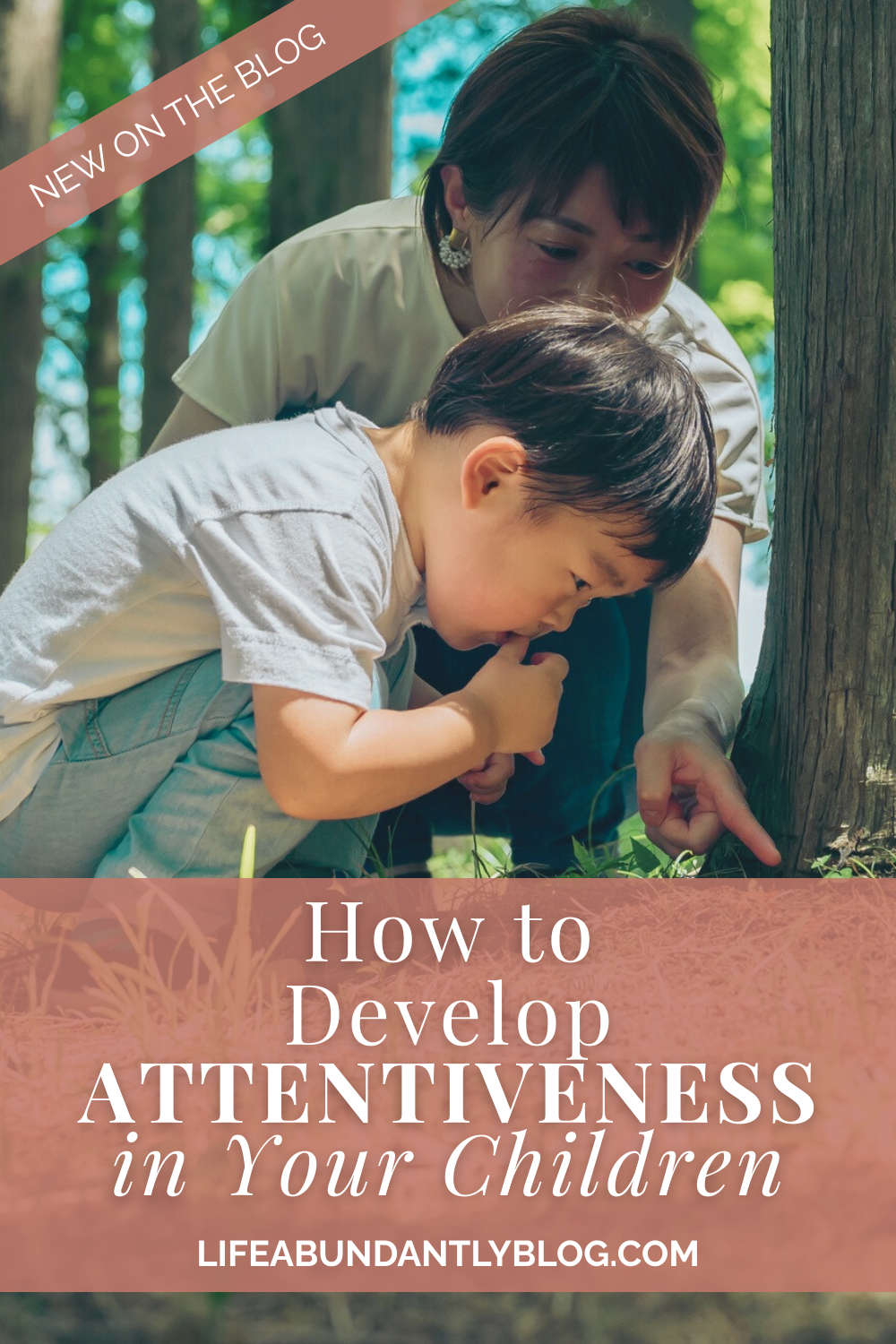
So, let's talk about attention.
"But, Erin," you say, "all your kids have ADHD, and so do you. How are you talking to me about attention right now?"
Valid question, friend. And it's exactly because our family struggles with attentiveness that I’ve made it my personal mission to understand how to foster it. When you start out with “attention muscles” that are underdeveloped, being intentional about training those habits becomes even more important.
Charlotte Mason once wrote:
“The highest intellectual gifts depend for their value upon the measure in which their owner has cultivated the habit of attention." (Home Education, Vol. 1, p. 137)
Attention isn’t something that simply springs up in a child. Some children are naturally more attentive than others, but no one comes fully trained. Like perseverance or obedience, attention is a skill and habit—one that must be shaped over time through gentle, consistent practice.

“Where’s the Script?”
That’s one of the most common questions we hear from new homeschool moms: “Where’s the script? I don’t know what to say!” And truly, I understand that question deeply. When you’re stepping into homeschooling for the first time—especially when it feels unfamiliar or weighty—the desire for structure and certainty can be overwhelming. You just want to do right by your child. The fear of “messing it up” can make a script feel like a lifeline.
But here’s the truth: you don’t need a script. You need truth spoken in your own voice.

For years, we have enjoyed nature-focused science curriculum that essentially required that we spend time out of doors each day. However, this year, we are working on more project and experiment-based science which is totally fine. But it turns out that if my curriculum isn’t constantly insisting that I head out of doors … well, I don’t do a great job at it.


I'm so glad you're here! I was just thinking about my last post where I shared our plans for the upcoming school year. Several people had questions about our participation in Classical Conversations and also, "How will you do all of that?" lol.
I wanted to address those questions because I think the answers may be helpful. When you see someone's homeschool plans written out, it's easy to miss all of the context behind how those plans actually fit into a family's week. So, here's a little more context about ours.