Should You Use Scripted Curriculum?
/“Where’s the Script?”
That’s one of the most common questions we hear from new homeschool moms: “Where’s the script? I don’t know what to say!” And truly, I understand that question deeply. When you’re stepping into homeschooling for the first time—especially when it feels unfamiliar or weighty—the desire for structure and certainty can be overwhelming. You just want to do right by your child. The fear of “messing it up” can make a script feel like a lifeline.
But here’s the truth: you don’t need a script. You need truth spoken in your own voice.

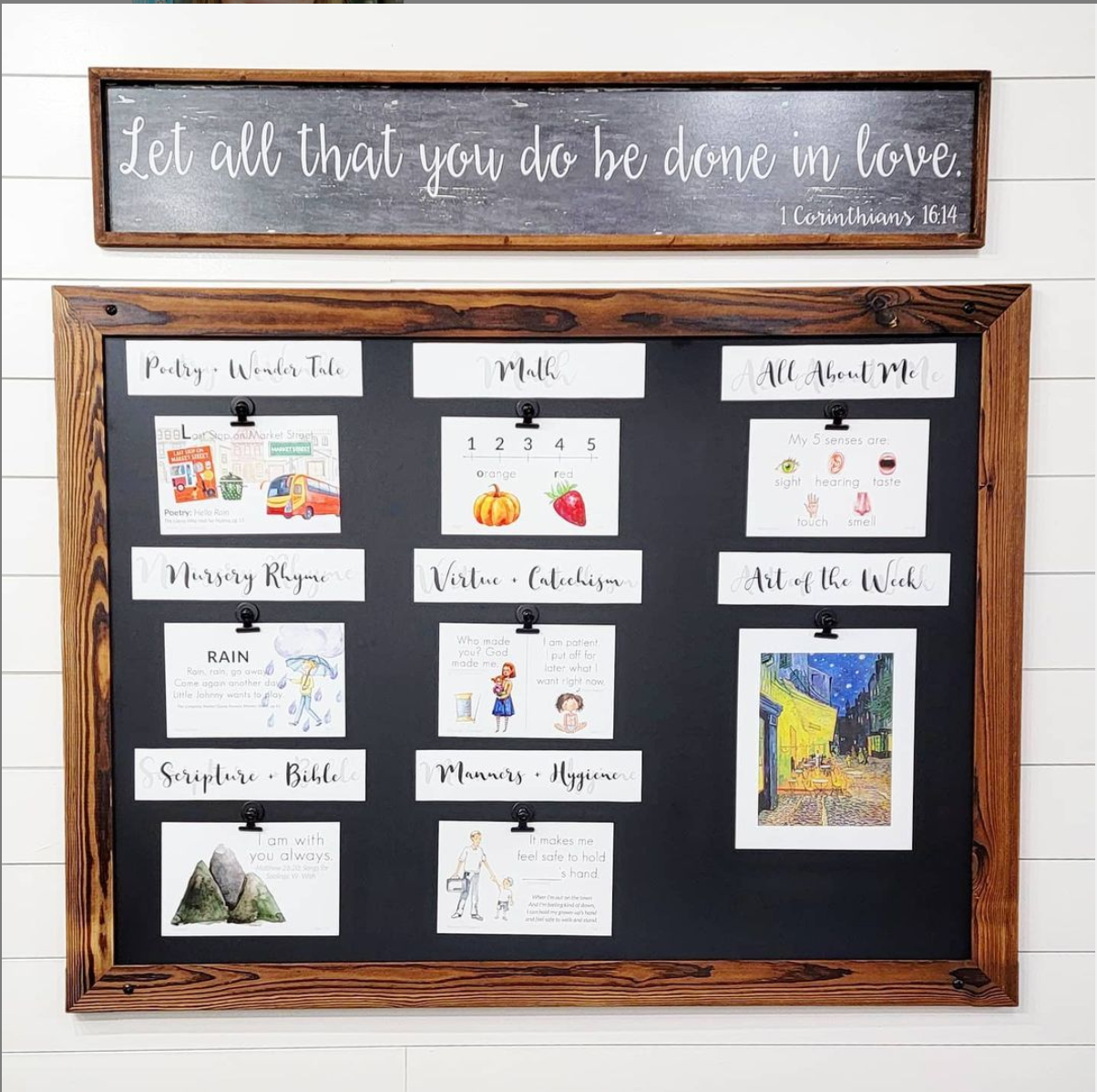
Let’s talk about the Memory Statement Cards, one of the most meaningful (and simplest) elements of Gentle + Classical. These cards guide your child—and you—through a week of short, beautiful truths, one small moment at a time. Each week introduces Scripture and catechism, virtue, manners and hygiene, early math concepts, and creation science. They’re simple. They’re grounding. And they’re intentionally unhurried.
Instead of long, scripted lessons, you’re given a handful of carefully chosen statements—and we leave it at that.
Why?
Because your home isn’t a classroom. It’s a family.
Your kitchen table is a place of nourishment and conversation. It’s where formation happens—not just in what you teach, but in how you’re present. You are shaping a person with your steady care. This kind of teaching doesn’t rely on a script. It flows from connection, consistency, and truth spoken in your own voice.
A scripted curriculum might check off boxes, but it won’t build the heart-level connection we believe matters most. We don’t want to hand you someone else’s words. We want you to speak from your heart, in your rhythm, to your child. Instead of rigid routines, we give you the pieces—and trust you to arrange them in a way that fits your real life.
You already know how to do this.
You didn’t need a script to teach your child to speak, to sit up, to walk, to feed themselves, or to use the restroom. You’ve been discipling and educating them from the very beginning. Kindergarten is not outside of your reach—it’s simply a continuation of the intentional, loving work you’ve already been doing.
Recite the statements. Chant them. Sing them. Post them on the fridge or display them on a memory board. Keep them in a basket. Say them at breakfast or while brushing teeth. There’s no single “right” way—and that’s the point. They’re meant to fit your family’s rhythm, messy mornings and all.
So why dwell on a few cards for a whole week?
Because this isn’t about memorization. It’s about marinating in truth. When children are given the chance to linger with an idea—especially one that is beautiful and meaningful—it has time to settle into the heart. These statements help build memory and vocabulary, yes, but they also cultivate attentiveness, imagination, virtue, and connection.
This time moves at a humane pace. We speak, we sing, we dwell, and we trust that God is at work in the quiet, ordinary moments. These moments are where formation takes root. They grow slowly through your attention, your presence, and the way you keep showing up.
No one knows your child better than you. You know what they need to hear again, what excites them, what frustrates them, and how to explain something in a way that makes them laugh. You know when to pause, when to repeat, when to gently reintroduce an idea later. And that is why this curriculum was made for your home, not a schoolroom.
If you’d like to see how I use our memory statement board—and why it’s such a powerful part of our home rhythm—you can watch a short video here:
Memory Statement Board: How and Why
One card at a time. One day at a time. You’re laying foundations, building trust, and shaping the culture of your home.
You don’t need to do it perfectly.
You just need to begin.
And I’ll be right here, cheering you on every step of the way.





I'm so glad you're here! I was just thinking about my last post where I shared our plans for the upcoming school year. Several people had questions about our participation in Classical Conversations and also, "How will you do all of that?" lol.
I wanted to address those questions because I think the answers may be helpful. When you see someone's homeschool plans written out, it's easy to miss all of the context behind how those plans actually fit into a family's week. So, here's a little more context about ours.